What restoration actually is
Restoration is a defined sequence of work on a tile roof that is structurally sound but finished cosmetically and starting to leak at its details. It is not painting a roof. The order matters, and skipping a step is where the cheap jobs come unstuck.
- Inspect and assess. Walk the roof, test tiles, check valleys, flashings, ridge lines and the roof space where there is access.
- Repair. Replace cracked, chipped and slipped tiles, clear and if needed replace valley irons, and sort out flashings.
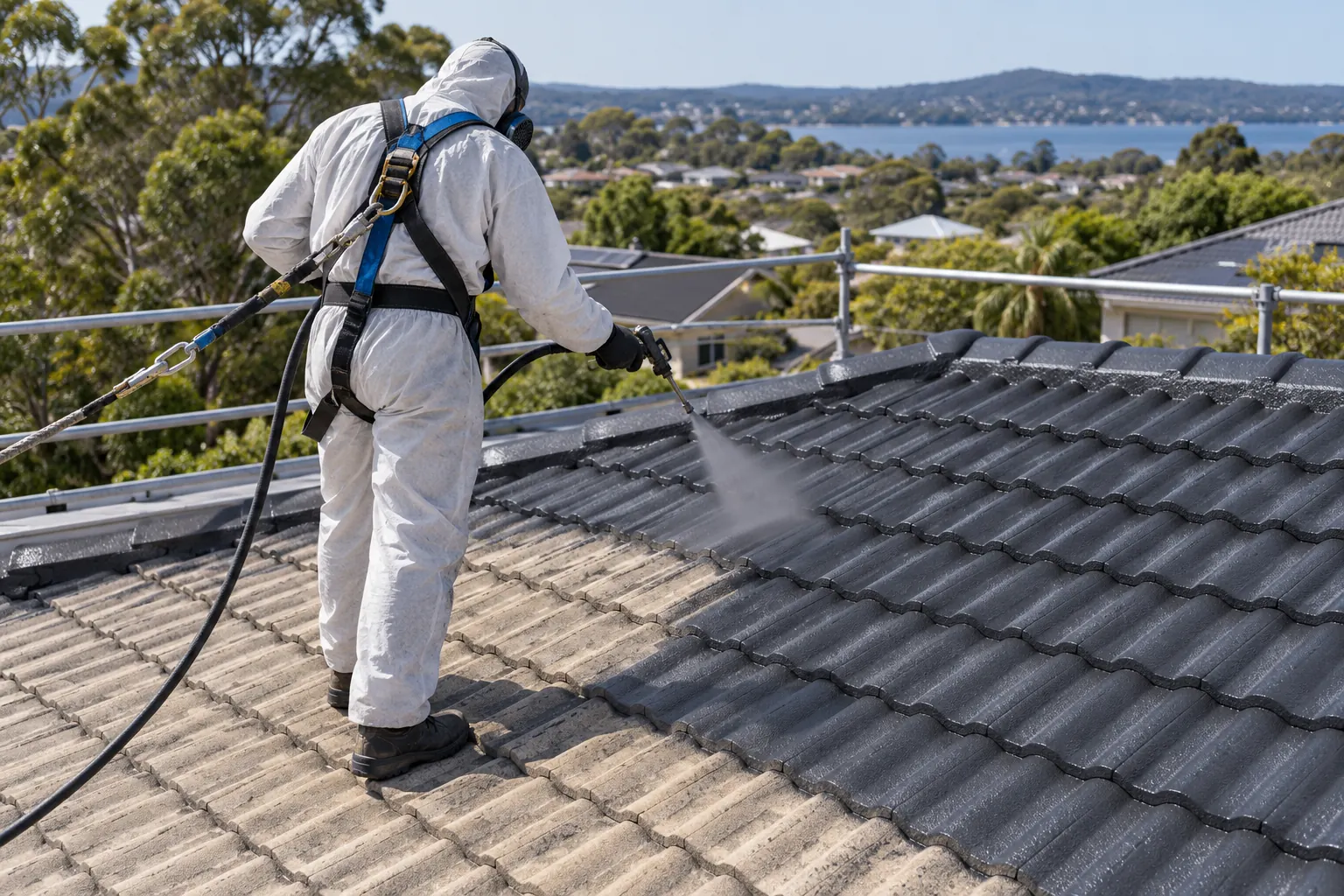
- Clean. High-pressure wash to strip moss, lichen, salt deposits and the chalked surface layer, so what follows has something to bond to.
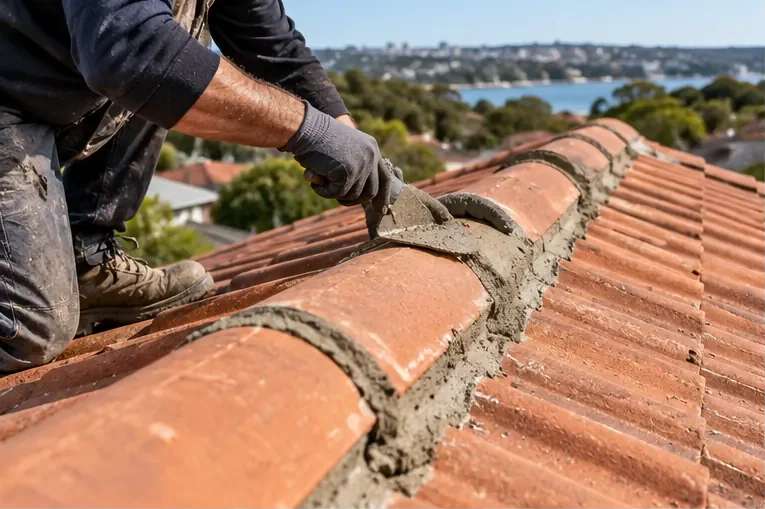
- Rebed. Replace the mortar bedding that holds ridge and hip capping where it has dried out, cracked or let the caps move.
- Repoint. A flexible pointing compound over the bed, which flexes with the roof instead of cracking out the way old rigid mortar does.
- Prime and coat. A sealer followed by membrane coats appropriate to the tile type, applied at the manufacturer's rate.
Where this pays off on the beaches
The post-war ridge suburbs are the natural home for restoration work. Narraweena was subdivided and built out after the Second World War, Allambie Heights was developed through the late 1940s and 50s, and Beacon Hill, Cromer, Frenchs Forest and Forestville filled in across the same period. Whole streets of concrete-tiled houses went on at once, and they are now reaching the end of their pointing life at roughly the same time.
On those roofs the tiles themselves are frequently still fine. What has gone is the mortar, the surface coating and a scattering of individual tiles. That is exactly the situation where restoration delivers most of the benefit of a new roof for a fraction of the disruption, with no structure exposed and no tonnage going to landfill.
The same applies to the harbour-side brick-and-tile houses through Balgowlah, Seaforth and Manly Vale, and to the tile roofs on the older parts of Dee Why and Brookvale.
When restoration is the wrong answer
We would rather talk you out of a restoration than take the money and leave you with a coated roof that still leaks. It is the wrong job when:
- The tiles have gone. A tile that sounds dull rather than sharp when tapped has absorbed water. Coating a porous tile seals the top surface and does nothing about the body of the tile.
- There is no sarking and the roof is already letting water through slipped tiles. Restoration does not add a secondary barrier.
- The leak is a flashing leak. Chimney, skylight and wall junction leaks are flashing work, not coating work.
- The roof plane has sagged. That is a structural issue underneath, and it will not be fixed from above.
- Rust has gone through the valleys and the gutters at the same time. When the metalwork is finished across the board, a recoat is lipstick.
In those cases the honest options are targeted roof repairs or a full replacement, and the written report will say which.
Ridge pointing in a salt-wind climate
Pointing is the single most common failure we see on tiled roofs here, and the coastal conditions accelerate it. Mortar bedding dries, shrinks and cracks on any roof as it ages. On the beaches, salt crystallising in those cracks and the constant thermal cycling of a roof in strong sun and onshore wind work the cracks wider, faster. Once a cap can rock, water goes straight under it, and the ridge is the highest point on the roof, so everything downhill of it gets wet.
Flexible pointing is the current answer because it moves rather than fracturing. It still needs sound bedding beneath it, which is why rebedding and repointing get quoted as a pair when the caps are loose.
Coatings, colours and heat
The coating system does three things: it seals the surface of the tile, it binds the remaining chalked layer, and it changes the appearance. On this coast the preparation does more for longevity than the brand does. A coating applied over inadequately cleaned tile will peel in sheets, and it will peel first in the unwashed areas where salt sat.
Colour is worth a thought beyond taste. A lighter roof takes on less heat, and in a low-pitch house where the ceiling sits close to the roof plane that is noticeable in February. Against that, parts of Manly and the older village centres sit within heritage conservation areas where roof colour and material can be controlled, so check the planning controls that apply to your lot before a dramatic change.
Ventilation is the companion item. If the roof space has no way to exhaust hot air, a recoat will not fix a hot upstairs bedroom. Whirlybirds or ridge vents sized to the roof area do more.
What a restoration costs
Area and pitch set the base. After that:
- How many tiles need replacing, and whether the profile is still available
- Total ridge and hip length, because that is where the bedding and pointing labour sits
- Condition of valleys and whether valley irons have to come out
- Access, scaffolding and whether the property is steep or cliff-side
- Whether gutters, flashings or ventilation are included in the same visit, which is usually cheaper than a second mobilisation
We inspect at no cost, write the findings down, and quote the work itemised so you can see what each part costs. The completed job carries a written workmanship warranty, and the work is carried out by established, licensed and insured roofing contractors working to NSW Fair Trading requirements.
Have the roof looked at
Call (02) 8000 1949 or ask for a free quote. We restore tile roofs across the whole service area, including Narraweena, Beacon Hill, Allambie Heights and Cromer.